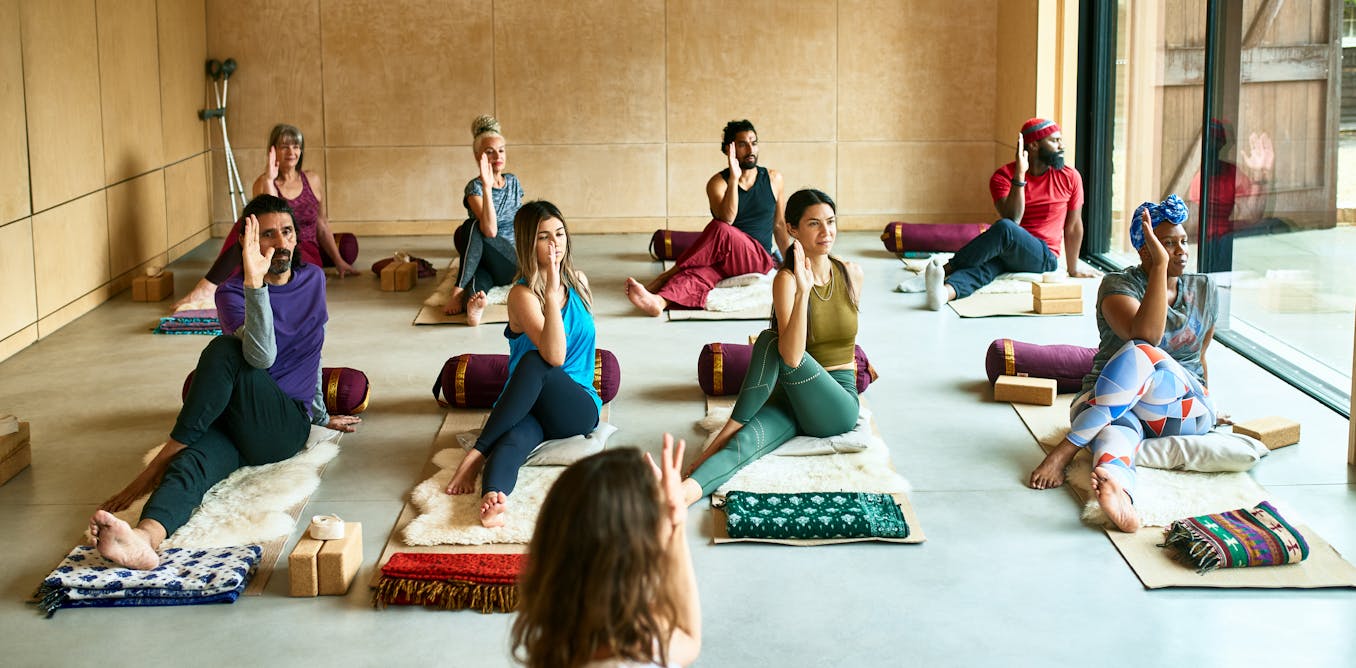
The best time for yoga goals, your way of life, and body rhythm will all impact the ideal time for yoga, but these ideas can help you choose the best choice:
The best time for yoga goals, your way of life, and body rhythm will all impact the ideal time for yoga, but these ideas can help you choose the best choice:

The best time for yoga
Awakening (about 5:30 – 7:30 AM, Sunrise)
Best for:Vitality, as well control, & a fresh start to the day. Why:
As per Ayurveda, traditional yoga promotes spiritual practice in the early morning (Brahma Muhurta). Your stomach is empty and your emotions become more clear. Ideal for raising power and maintaining an efficient habit.
Hatha, Vinyasa, Surya Namaskar, & meditation are the finest styles of yoga.
In the afternoon of evening ◌(about 4:30 to 7:00 PM),
Greatest for:Strength training, flexibility, and post-work relaxation Why:
You had higher physical performance capacity than in the morning; Your body is warmer, more flexible, and less prone to injury; It may help decrease day stress.
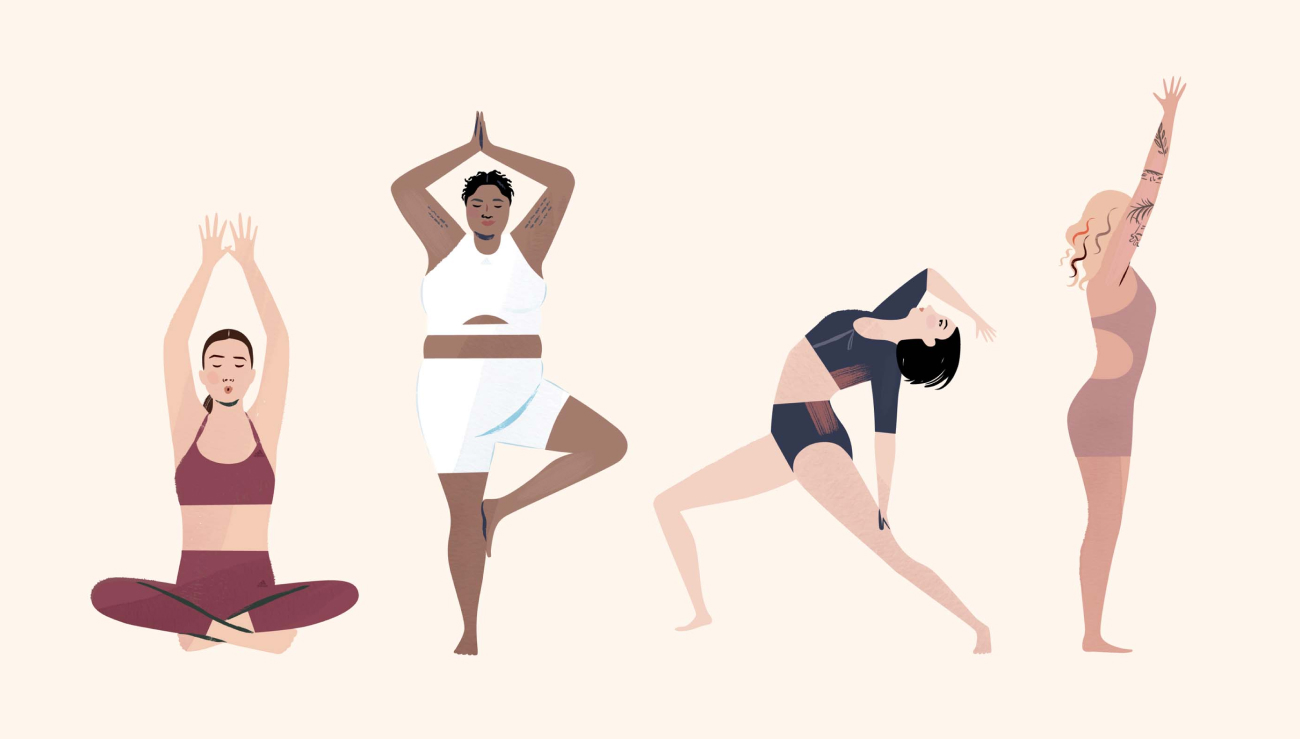
Power yoga, vinyasa, yin yoga, & restorative yoga are the top styles of yoga.
Evening (after 8:00 PM)
Best for:Better sleep and relaxation Why:
Yoga exercises that go slower relieve the nervous system. Be clear of intense exercises and concentrate with deep breathing and mildly stretches.Perfect styles of yoga: Gentle Hatha, Restorative, & Yoga Nidra
Personalised Tips:
Consistency is preferred than time-of-day superiority. Empty stomach is ideal for physical practice, typically occuring within two to three hours after a meal.
Pay watch over your body some people exercise in the morning, others will not.
Would you like aid setting an eating plan or routine based on those goals (e.g., stress a reduction, flexibility, weight loss)?
Yoga for Newbies: A Full Handbook
1. begin with the The basics
Pay focus on necessary poses (asanas) that enhance your backbone.
Basic Beginner Vacancies:
The Sanskrit designation given to the pose, alongside its perks are provided.
The three poses are included the following: Mountain Pose
2. Offer short meetings initial
10 to 20 minutes each week is an amazing place to begin.
Emphasize quality above quantity.
3. Try a Simple Routine
It’s an easy beginner yoga flow and lasts 10 to 15 notes:
3. Downward Dog (30 sec–1 min) 2. Cat-Cow Pose (1–2 min) 3. Easy Seated Breathing (2 min)
Child’s Pose (1 second)Cobra Pose (30 second)Seated Forward Fold (1 minute)Tree Pose for thirty seconds each side) 8. Deep Breathing + Lying Down @ 2-3 a few seconds
Would you like a video guide or a printable PDF of this?
4. BrattonMake a Choices
Conduct it without casting judgment.
Give focus on your emotions instead of how you look. Adopt deep, intentional breathes.
5. Make Use of Resources for Monitoring Achievement
Yoga YouTube channels that’s accessible for free to novices:
Yoga With Adriene (welcoming and helpful) SarahBethYoga (briefly, rigorous exercises) details Beginner series by Fightmaster Yoga
6. Stay Dedicated
Yoga is not about performance; development is subtle. Be consistent and patient. As your confidence expands increase your repetition to two to three times per week.
Does you wish for me to develop a beginner yoga plan for that lasts 7 days? Or recommend a routine for what you want to achieve (e.g., back pain, stress relief, flexibility)?
In alongside enhancing flexibility, yoga can surprisingly dramatically enhance strength. It enhances posture and joint stability while increasing functional, lean muscle strength by the incorporation as balancing as well as sustained poses, and bodyweight resistance.
When you’re starting out or intermediate, here’s how to use yoga for strength:
Yoga for Authority: Key Thoughts https://www.yogajournal.com/
Take Notice To Do The Following:
Holding postures in a prolonged period duration (15–60 seconds)
2. Standard change between sets
3. Throughout every move, employ your inhalation & core.
4. Looking on the complete bodyArms, legs, back, core, & glutes
Greatest Strength Yoga Pose Ideas https://thefitgamer.com/how-to-lose-weight/
Set up Muscles collaborated Reasons to Building
Plank Pose (Phalakasana) Core, arms, shoulders Establishes stability all over an body
Chair Pose(Utkatasana) The quadriceps, glutes, core Lower body burn & strength
Warrior (Virabhadrasana Legs, hips, arms Creates lower-body strength and endurance
Boat Pose(Navasana) (Salabhasana) Hamstrings, glutes, and lower back Adds posterior chain strength
20-Minutes Yoga Strength Flow Sample
You may do that beginner-to-intermediate sequence up to four times each week:
1. Two-minute warm-up:
Downward Dog Cat-Cow
Secondly, the Principal Flow (12–15 moments):
Chaturanga (3–5 reps) Plank (30 sec)
Downward Dog * Upward Dog
Hold 30 seconds per both Warrior I & Warrior II.
Boat Pose (three sets, 20–30 mins) * Chair Pose (30–45 secs)
Side Plank: a minute either side
3. Soften for five to five notes:
Child’s Pose Seated Forward Fold Cobra Pose
Progression Tips for Success:
As you progress, add more power yoga or Vinyasa styles. To increase challenges, add weights or resistance band. To enhance endurance, repeat sits in sets.
Would Your Want Videos?
Did you would like:
custom plan for toning a specific area (like your arms, core, or glutes) or a video-based strength yoga playlist or a printable strength yoga plan (weekly)?
Inform me the goal you would like to accomplish and I’ll tailor it!
Of of course! Yoga gently loosens tight muscles and improves the range of motion in your joints, thus making it one of the greatest ways for enhancing both flexibility and mobility. You can feel looser, lighter, and more balanced after regular sessions of yoga, no matter whether your tightness is from sitting, physical activity, or aging.
Yoga for Motion & Flexibility
Difference:
Muscle length (e.g., touching your toes) flexibility
Mobility indicates a capacity if a joint to operate for its range (e.g., rotating shoulders or deep squatting).
A successful method of yoga works with both
Optimal Postures for Mobility & Flexibility
Leaning forward whilst seated & thread the needle (shoulders)
3. Unwind for two a few seconds
Savasana (calm down) Happy Baby Supine Twist
Beginner-Friendly Flexibility Plan
Scheduling:
Hold each stretch for 30 or 60 seconds, breathe long breaths, & focus on slow progress instead of straining oneself for three to five days a week.
Success Tips
Before performing deep stretches out warm up gently. Breathe evenly and slowly. Breath relieves tension. Be consistent: regular practice, not intensity, produces results. Never use force; patience will improve your flexibility.
Want a Personalised Method?
I’m capable of generate:
A PDF cheat sheet with poses and timings A plan for hip mobility hamstring tightness, or shoulder opening A seven-day flexibility yoga routine
I can modify it for you once you let me know your current level if flexibility or your goals (for example, deeper squats, touching toes, or releasing back rigidity).